The Nine of Swords is the card of deep worry and mental stress. It often appears during sleepless nights, when guilt, anxiety or fear feel impossible to escape and every problem looks larger at three in the morning than it will by daylight.
It is one of the most uncomfortable cards to draw, but it is also an honest and compassionate one. It names what haunts you in the quiet hours and asks a gentle question: are these fears as real as they feel? Very often the suffering comes less from events themselves than from the mind replaying them, and that means there is room for relief.
- Symbolism
- Upright
- Reversed
- Love
- Career
- Spirituality
- Yes or no
- Feelings
- Advice
- As a person
- Past, present, future
- Combinations
- FAQ
Nine of Swords Symbolism
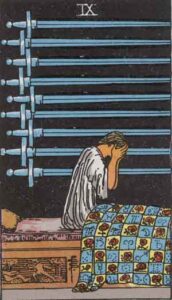
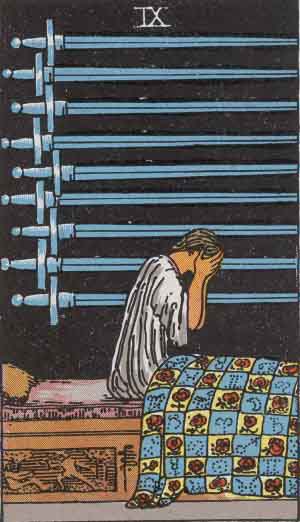
In the Rider-Waite-Smith image, a figure sits up in bed in a dark room with their face buried in their hands. Nine swords hang horizontally on the black wall behind them. The quilt is decorated with roses and astrological symbols, and the side of the bed is carved with a scene of one figure overpowering another.
The detail that matters most is that the swords don’t touch the sleeper. They hang in the background, stacked like thoughts, heavy and threatening but not actually wounding. That is the heart of this card: the pain is real, but much of it comes from what the mind is doing with the dark.
The quilt offers a quieter message. Roses and the signs of the zodiac suggest that life, beauty and the turning of time are still there, even if you can’t feel them right now. Morning comes.
Nine of Swords Upright Meaning
Upright, the Nine of Swords reveals a period of intense worry or emotional distress. It may be tied to guilt, shame, grief, regret or anxiety about something that hasn’t happened yet. You may be lying awake replaying a conversation, rehearsing worst-case outcomes, or blaming yourself for something out of your control.
The card often suggests that your fear is being amplified by your mind. The situation may be difficult, but it is probably not as hopeless as it feels at night, when you are tired and alone with it. This isn’t a dismissal of your pain. It’s an invitation to test your fears against the facts.
The Nine of Swords urges you to express or release these worries rather than burying them. Talk to someone you trust, write the fears down, or tackle the one practical step that would ease the pressure. Worry tends to shrink once it’s said out loud, and support is one of the most effective things you can reach for now.
Key upright themes
- Anxiety, worry or mental overload
- Sleeplessness and racing thoughts at night
- Guilt, regret or past mistakes weighing on you
- Overthinking and imagining the worst
- A need for support, rest and self-compassion
Nine of Swords Reversed Meaning
Reversed, the Nine of Swords often shows the worst of the worry beginning to lift. You may be sleeping better, talking about what frightened you, or realising that your fears were larger than the reality. It can point to recovery that starts the moment you let someone in.
It can also carry a different message: pain that is being hidden. You may be putting on a brave face, avoiding a problem that needs attention, or pushing distress so far down that nobody around you knows how much you’re struggling. If that sounds familiar, the card is a nudge that you don’t have to carry it alone.
Occasionally it shows anxiety reaching a peak before it breaks. When that’s the case, help is needed, and it is available.
Key reversed themes
- Relief from anxiety or fear
- The first steps of emotional recovery
- Hiding or suppressing distress
- Reaching out for support or professional help
- Realising your fears were exaggerated
Nine of Swords in Love
In love, the Nine of Swords reflects worry, heartache or fear of loss. You may be anxious about where a relationship is going, feeling guilty about something you said or did, or grieving a connection that ended. Nights can be the hardest part.
If you are single
You may be lying awake over a past relationship, or worrying that you’ll never meet the right person. The card suggests these fears are louder than the facts. Be as kind to yourself as you would be to a friend in the same place, and give yourself time before judging your prospects.
If you are in a relationship
Anxiety about the relationship may be building: fear of betrayal, worry that your partner is pulling away, or guilt over a mistake. Before assuming the worst, talk. Many relationship fears grow in silence and shrink quickly in an honest conversation.
Reversed in love
Reversed, healing becomes possible, especially if both people are willing to be honest about what has been worrying them. It can also show someone finally letting go of guilt over a past relationship and sleeping more easily as a result.
Nine of Swords in Career and Money
Professionally, the Nine of Swords can point to heavy stress, burnout or fear of failure. You may be overwhelmed by deadlines, anxious about job security, or unable to stop thinking about a mistake. Work worries are following you home and keeping you awake.
The card is a clear sign to look after your mental health. Break the problem into parts, ask for help with the workload, and talk to your manager or someone in HR if the pressure is unmanageable. One mistake rarely defines a career, even if it feels that way at midnight.
With money, it often describes financial worry: debts that keep you up, or bills you’re afraid to open. Facing the actual figures is usually less painful than imagining them, and a free debt advice service can help you make a plan.
Reversed, there may be a turning point. Stress starts to ease as you get support or make changes, though it can also warn of hiding how badly you’re coping at work. Speaking up early prevents a bigger crash later.
Nine of Swords in Spirituality
Spiritually, this card can mark a dark night of the soul, a time when meaning feels far away and old guilt or fear crowds out peace. It asks you to meet yourself with compassion rather than judgement.
Gentle practices help: a short meditation or breathing exercise before bed, writing down worries so they’re out of your head, or a simple evening ritual such as lighting a candle and naming three things that went well. Shadow work can be valuable too, but go slowly and with support.
Reversed, you may be emerging from a spiritual crisis, finding that the dark period has left you with more understanding and a steadier sense of peace.
Is the Nine of Swords a Yes or No Card?
No. The Nine of Swords usually means no, because worry, fear or stress surround the question right now.
The card often suggests that anxiety is shaping how you see the situation. Rather than acting from fear, wait until you feel calmer and have looked at the facts, then ask again.
Reversed, the answer softens towards maybe. The worst of the worry is passing and things may turn out better than you feared, but give yourself time to recover before making a big decision.
Have a question of your own? Try the free yes or no tarot reading: hold the question in mind and draw one card.
Nine of Swords as Feelings
As feelings, the Nine of Swords describes someone who is anxious, worried or guilty about the connection. They may care about you deeply but be overthinking everything: fearing rejection, regretting something they did, or losing sleep over where things stand.
Their worry may have little to do with anything you’ve done. It can reflect their own fears or pressures elsewhere in their life.
Reversed, their anxiety is easing. They may be ready to talk about what’s been troubling them, or starting to feel more hopeful. It can also mean they are hiding how worried they really are.
Nine of Swords as Advice
As advice, the Nine of Swords says: don’t face the night alone. Tell someone what’s worrying you. Write the fears down and ask which ones are facts and which are predictions. Look after the basics too: rest, food, fresh air and fewer late-night screens.
If anxiety, low mood or sleeplessness has lasted for weeks or is affecting your daily life, talk to your doctor or a qualified counsellor. That’s a practical step, just as you’d see someone about a physical problem. And if you ever feel unsafe or have thoughts of harming yourself, contact emergency services or a crisis line straight away, such as Samaritans on 116 123 in the UK and Ireland, or 988 in the US.
Nine of Swords as a Person
As a person, the Nine of Swords describes someone carrying worry they may not show. By day they seem fine, even funny. At night they are the one checking the bank balance at two in the morning, replaying a conversation or composing apologies for things nobody else remembers. They are often conscientious and kind, which is partly why guilt sticks to them so easily.
It can also point to a person whose situation is a source of anxiety in your life, or to the role of the one who stays up worrying about everyone else. Imagine a parent lying awake over a grown child’s choices, or a partner quietly fearing the relationship is slipping. Their fear is real, even when the thing they fear is not. What helps most is someone to say it to, and the practical support of a doctor or counsellor if the worry has taken over their sleep or health.
Reversed, the Nine of Swords as a person is someone emerging from a dark stretch, starting to talk and sleep again. It can also describe someone hiding how much they are struggling behind a brave face, so it is worth gently asking how they really are.
Nine of Swords in the Past, Present and Future
In the past
In a past position, the Nine of Swords points to a period of anxiety, grief or guilt that you lived through. It may still echo in the way you brace for bad news. Recognising where that reflex came from can make it easier to loosen.
In the present
In the present, worry is louder than the facts. You may be deciding things at night that deserve daylight. Name the fear, check what is actually known, and talk to someone before you act on what the anxiety is telling you.
In the future
In a future position, the card flags a situation likely to cause some stress, rather than a disaster. That is useful warning: build in support, keep up the basics of sleep and food, and plan a practical step so that, if the worry arrives, you already have something to do with it.
As the outcome
As the outcome, the Nine of Swords suggests that the question itself may cause more distress than its answer. The result could feel heavier than it needs to unless the underlying fear is dealt with; addressing the anxiety changes how the outcome is lived.
Reversed in these positions, the worst of the worry is passing. In the past it shows a dark time already survived; in the present or future, hope returning, reaching out for help, or a hidden struggle that needs to come into the open.
Nine of Swords Tarot Combinations
Worry changes shape with the cards that sit beside it, and these are the pairings that tell you most:
- The Moon: anxiety fed by uncertainty, with fears bigger in the dark than they really are. Get the facts and wait for daylight before deciding anything, and if worry is affecting your sleep or health, talk to your doctor (more on this pair).
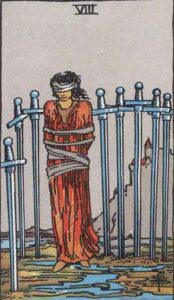
- Eight of Swords: overthinking that has become its own prison. The way out is one conversation or one small step, not more thinking (more).
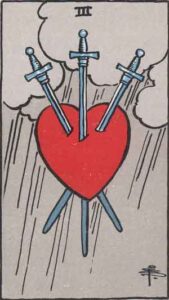
- Three of Swords: grief behind the sleeplessness. The worry is rooted in a real hurt that needs mourning, not just managing.
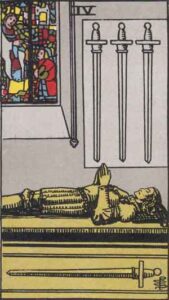
- Four of Swords: a mind that needs rest but cannot switch off. Gentle routines and support will help more than forcing yourself to relax.
- The Star: hope after a dark night. Healing is possible, and the fear begins to ease.
- The Sun: morning comes. In daylight the problem looks smaller, and reassurance or good news settles the worry.
The tarot card combinations guide covers many more pairs, with tips for reading them in your own spreads.
Nine of Swords: Frequently Asked Questions
What does the Nine of Swords mean in a reading?
It describes worry, anxiety, guilt or sleepless nights. The card suggests that fear is being magnified by the mind, so things may be less hopeless than they feel in the dark. It asks you to share the load, check your fears against the facts and be kind to yourself.
Is the Nine of Swords a yes or no card?
It is generally a no. Anxiety or stress surrounds the question, and decisions made from fear rarely turn out well. Reversed, it leans towards maybe, because the worry is easing. Either way, it’s worth waiting until you feel calmer before acting.
What does the Nine of Swords mean as feelings?
Someone is anxious, guilty or overthinking the connection. They may care a lot but be afraid of rejection or preoccupied by a mistake. Their worry may come from their own pressures rather than anything you did. Reversed, they are starting to feel calmer or ready to talk.
What does the Nine of Swords reversed mean?
Reversed, it often shows anxiety lifting, fears proving smaller than expected and recovery beginning, especially after reaching out for support. It can also point to distress that is being hidden or suppressed. If that fits, it’s a reminder you don’t have to cope alone.
Is the Nine of Swords a bad card?
It is a difficult card, but not a prediction of disaster. It usually reflects how heavy worry feels rather than what will actually happen. Its message is supportive: name the fear, talk to someone, rest and get help if you need it. It often marks the moment to ask for help.
Final Thoughts
The Nine of Swords reflects the darkest hours before dawn. The pain it describes is real, but the swords on the wall are not in your hands, and many of them are thoughts rather than facts. Share what you’re carrying, and the load gets lighter. If rest is what you need, the Four of Swords shows what recovery looks like.
For a gentler daily check-in, try the card of the day, or see how this card fits into its suit in our guide to the Swords cards.