New to tarot? Start here
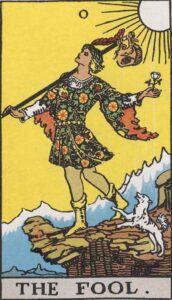
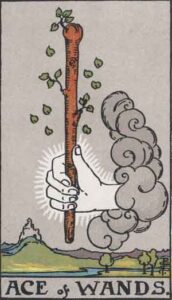
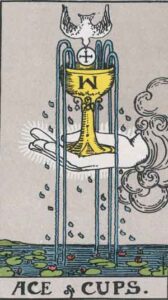
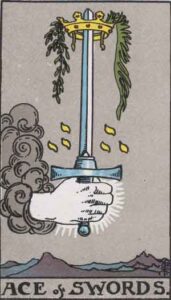
A tarot deck has 78 cards in two groups. The 22 cards of the Major Arcana, such as The Fool, The Empress and The Tower, stand for the big themes and turning points of a life. The other 56 cards, the Minor Arcana, are split into four suits that cover everyday experience: Wands for drive and creativity, Cups for feelings and relationships, Swords for thoughts and conflict, and Pentacles for money, work and the body.
Every card on this site has its own guide covering the upright and reversed meanings, love, career and money, feelings, advice and a straight yes-or-no answer. The meanings follow the classic Rider-Waite-Smith deck, drawn by Pamela Colman Smith in 1909, which most modern decks are based on.
How a tarot reading works
A reading can be as simple or as elaborate as you like. You focus on a question or situation, shuffle, and lay cards out in a pattern called a spread. Each position in the spread has its own meaning, such as the past, the present or the likely outcome, and the card that lands there adds its own layer.
The skill lies in putting the pieces together: noticing which suits dominate, how the cards speak to each other and what feels true for your situation. If you are starting out, a single card or a three-card reading is the best place to begin. When you are ready for more, the spread guides walk you through larger layouts such as the Celtic Cross.
Upright and reversed cards
A card that lands upside down is called reversed. Many readers treat a reversal as the card’s energy being blocked, delayed or turned inwards rather than as its opposite. You can read reversals or ignore them, but choose one approach and use it consistently.
What people use tarot for
Tarot is not just fortune telling. Many people use it as a tool for reflection: drawing a card can bring feelings, motivations and choices to the surface, a little like journaling does. Others use it as a daily ritual, a creative prompt or a way to slow down and listen to their intuition.
So are readings accurate? Opinions vary. Some people see the cards as revealing hidden truths or likely outcomes; others see them as a mirror for what is already inside you. Either way, the cards offer symbols and stories that help you think differently about a situation. What you do with that is always up to you.
Where tarot came from
Tarot’s origins are surprisingly down to earth. The cards began as a card game, tarocchi, in fifteenth-century Italy. The striking images were part of the fun, but they were not designed for divination.
It was not until the late eighteenth century that occultists in France began linking the cards to ancient wisdom and using them for spiritual exploration and prediction. The Rider-Waite-Smith deck of 1909 gave every card, including the numbered Minor Arcana, a full illustrated scene, and that is a large part of why it is still the reference deck today.
Common myths about tarot
- Tarot is all doom and gloom. Cards such as Death and The Tower look frightening, but they usually point to change and the end of old patterns, not literal disaster.
- The cards decide your fate. A reading shows possibilities, pressures and paths you may not have considered. The choices are still yours.
- You need to be psychic. Anyone can learn to read tarot with a little practice and curiosity. It is about symbolism, storytelling and listening to your intuition.
How to start reading tarot
You do not need an expensive deck or a professional reader to begin. A few simple habits will teach you more than any rulebook:
- Draw a card of the day each morning and notice how its theme shows up.
- Keep a tarot journal with the card, your first impression and what happened.
- Learn one suit at a time, starting with the one that interests you most.
- Practise with simple spreads before moving on to larger ones.
- Read the blog for ideas on asking better questions and reading for yourself.
Tarot is a tool, not a rulebook. Take what helps, leave what does not, and let your understanding of the cards grow with each reading.