
The Ten of Swords is one of the most dramatic-looking cards in the tarot. It represents a painful ending, a betrayal or a defeat, the kind of moment when you feel you’ve hit rock bottom. Something has run its full course, and it is over.
The image is stark, but the card is not a prediction of disaster out of nowhere. It usually describes something that has been building for a while and has now reached its conclusion. And it carries a real note of hope: the worst has happened, so the only way from here is up. This is the end of a cycle and the start of recovery.
- Symbolism
- Upright
- Reversed
- Love
- Career
- Spirituality
- Yes or no
- Feelings
- Advice
- As a person
- Past, present, future
- Combinations
- FAQ
Ten of Swords Symbolism
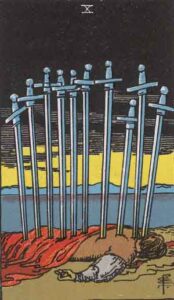
In the Rider-Waite-Smith image, a man lies face down on the ground with ten swords in his back. A red cloth is draped over him. Above, the sky is black, but along the horizon a band of golden light is breaking over calm water and distant hills.
Ten swords is deliberate overkill. One would have been enough, and the excess tells you this is about finality rather than a literal attack. There is nothing left to fight, and nothing more that can be taken. That’s grim, but it’s also freeing: once you are at the bottom, you can stop bracing for the fall.
The dawn is the key detail. Darkness fills most of the card, yet the light is already arriving and the water is still. Ten is the last number of the suit, so the story of the Swords ends here and a new cycle can begin.
Ten of Swords Upright Meaning
Upright, the Ten of Swords indicates a crushing blow, a loss or an emotional low point. Something important has ended, perhaps through betrayal, failure or simple exhaustion. You may feel stabbed in the back, completely drained, or unable to pretend any longer that a situation can be saved.
It is the card of hitting the lowest point, but also of the release that comes after surrender. Resistance takes energy, and here the fight is over. What’s done is done. You can stop hoping it will somehow work out and start grieving, resting and rebuilding.
The card can also point to a little overdramatising. Swords are the suit of the mind, and ten swords can reflect a situation that feels like the end of the world when it is really the end of a chapter. Painful, yes. Final for that chapter, yes. But not the end of you.
In practical terms, expect a clear ending rather than more limbo. For all its pain, that clarity is often what makes a fresh start possible.
Key upright themes
- Painful but necessary endings
- Betrayal or feeling stabbed in the back
- Exhaustion, burnout or total defeat
- Hitting rock bottom
- Acceptance, and the first light of a new start
Ten of Swords Reversed Meaning
Reversed, the Ten of Swords often signals recovery and resilience after a devastating period. The swords are falling away. You may be starting to heal, getting back on your feet and finding that you survived something you thought would break you.
It can also show resistance to an ending that has to happen. You might be trying to revive something that is clearly over, or refusing to accept a loss, which prolongs the pain. In that case the card asks you to let go so that recovery can begin.
Sometimes it warns against staying down longer than you need to. Grief takes time, and that’s healthy. But if you notice yourself retelling the same injury long after it has stopped helping, the reversed Ten gently suggests it’s time to stand up.
Key reversed themes
- Recovering and starting over after hardship
- Letting go of old wounds
- Resisting or delaying an inevitable ending
- Reclaiming your strength and peace
- Breaking a painful cycle for good
Ten of Swords in Love
In love readings, the Ten of Swords can indicate a painful breakup, a betrayal or a definite emotional ending. It is often a final separation that has been building for some time. It can also reflect deep wounds within a relationship that can no longer be ignored.
If you are single
You may still be hurting from a relationship that ended badly, or feel you’ve hit a low point in your love life. The card asks you to let the old story end properly rather than carrying it into the next connection. Rest, lean on friends, and let yourself heal before looking for someone new.
If you are in a relationship
This card suggests a crisis point. There may be a betrayal, a painful discovery, or a moment when one or both of you admit it’s over. Not every reading means a breakup, but it does show that the relationship as it was can’t continue. Something has to end, whether that’s the partnership or the pattern hurting it.
Reversed in love
Reversed, the card points to healing after heartbreak, forgiveness or finally moving on after closure. It can also warn against clinging to a relationship that has clearly ended. The broken heart spread can help you work through what happened and what comes next.
Ten of Swords in Career and Money
Professionally, the Ten of Swords can signal the end of a job, burnout or a betrayal at work. You might be finishing a role, project or partnership that has drained you completely. It may come as a shock, or as the final straw after a long struggle.
It’s painful, but it clears the way. Once the worst has happened, you can see your position clearly and start again. Take practical steps: update your CV, reach out to your network, and give yourself a moment to recover before rushing into the next thing.
With money, the card can describe a financial low point, such as a loss or a debt that has come to a head. Treat it as a line in the sand. A free debt advice service or a qualified adviser can help you build a plan from here.
Reversed, you may be ready for a comeback, moving forward with hard-won experience. It can also warn that you’re clinging to a failing project or job long after it has stopped working for you.
Ten of Swords in Spirituality
Spiritually, the Ten of Swords can represent the end of old beliefs or an old version of yourself. You may feel lost or let down by a path you once trusted. The card reminds you that transformation often comes through surrender, when you stop defending what no longer fits.
Treat this as a time for rest and honest reflection rather than forcing new answers. The dawn on the card doesn’t arrive because the figure does anything. It arrives because night ends.
Reversed, you are emerging from this dark period with new insight and a quieter, sturdier kind of faith in yourself.
Is the Ten of Swords a Yes or No Card?
No. The Ten of Swords is a clear no. Whatever you’re asking about has reached its end, or is heading for a painful conclusion.
It is honest rather than cruel. Accepting the no can save you time and heartache, and it frees you to put your energy into something that can actually work.
Reversed, the answer is still usually no to the original question, but yes to recovery. You are coming through the worst, and new possibilities will open once you let the old situation go.
Have a question of your own? Try the free yes or no tarot reading: hold the question in mind and draw one card.
Ten of Swords as Feelings
As feelings, the Ten of Swords describes someone who feels hurt, betrayed, defeated or completely exhausted by the situation. They may believe the connection has reached its end, or feel so wounded that they have nothing left to give right now.
It can also show someone who feels they’ve been treated unfairly and is struggling to see past that injury.
Reversed, they are beginning to recover. They may be ready to let go, forgive, or at least talk about what happened more calmly. Whether that leads back towards you or away depends on the rest of the reading.
Ten of Swords as Advice
As advice, the Ten of Swords says: let it end. Stop trying to rescue something that is finished. Accept what has happened, grieve it properly, and give yourself real rest.
Then look for the first light. Ask what this ending has taught you, and what you’d do differently next time. You don’t have to rebuild everything at once. Getting up, one small step at a time, is enough. If the loss has left you struggling to cope, talking to friends, your doctor or a counsellor can help you through it.
Ten of Swords as a Person
As a person, the Ten of Swords describes someone at their lowest point. They may have just been let go, left, betrayed or simply worn down to nothing, and for now they have no fight left. They are not looking for advice so much as someone to sit with them while the worst of it passes. Give them room to be flattened; that stage does end.
The card can also describe a person who habitually casts themselves as the victim. Every setback becomes a catastrophe, every slight a stab in the back, and conversations keep circling back to their injuries. Imagine someone whose break-up story from years ago is still their main topic. Their pain was real, but the retelling now keeps the wound open. Less often, the Ten can point to the person who delivered the final blow in a situation, so read the surrounding cards before deciding which role anyone plays.
Reversed, the Ten of Swords as a person is someone getting up again. They are shaky but recovering, with a dark sense of humour about what they survived. It can also show a person refusing to accept that something is over, and so dragging out their own pain.
Ten of Swords in the Past, Present and Future
In the past
In a past position, the Ten of Swords shows a painful ending that is behind you: a betrayal, a collapse or a loss that felt final. It may be the root of the question you are asking now. The reading may also be pointing out that you survived it, and that the rest of the spread is what grew afterwards.
In the present
In the present, something is ending or has just ended, and there is no point pretending otherwise. Stop spending energy on rescue. Rest, lean on people who care and let the chapter close, because rebuilding cannot start until it does.
In the future
In a future position, the card warns that a situation is heading for a clear conclusion. That is hard to see, but it is also information you can use: prepare, protect what matters and consider whether ending it on your own terms would hurt less than waiting for it to collapse.
As the outcome
As the outcome, the Ten of Swords says this particular path ends here. It is a no to the question as asked, but it clears the ground completely, and there is nowhere left to go but up.
Reversed in these positions, the worst is over. In the past it shows a recovery already made; in the present or future, rising again, breaking an old cycle or finally accepting an ending you have been resisting.
Ten of Swords Tarot Combinations
As the last numbered card of the suit, the Ten of Swords often takes on a clearer meaning from its neighbours:
- The Tower: a sudden fall and a complete ending. The worst is over and things improve from here; in love it usually means a definite end rather than a rough patch (more on this pair).
- Death: an ending that is truly final. Something has run its course, and letting it go makes space for real change.
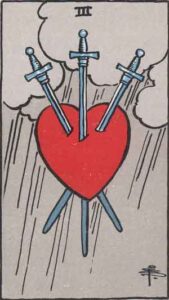
- Three of Swords: heartbreak and betrayal. The hurt is sharp and personal, and grieving it properly is part of healing.
- The Star: hope after rock bottom. Recovery follows the lowest point, slowly but surely.
- Judgement: rising again. You look back honestly at what happened and come out of it with a fresh start.
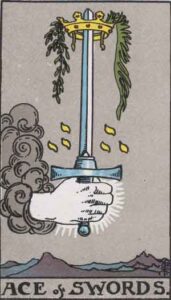
- Ace of Swords: the cycle begins again. After the ending comes clarity, a new idea or an honest new beginning.
For more pairs and a simple way to read two cards together, see the tarot card combinations guide.
Ten of Swords: Frequently Asked Questions
What does the Ten of Swords mean in a reading?
It points to a painful ending, a betrayal or a moment of rock bottom. Something has fully run its course. The card is hard to see, but it also brings relief: the worst is over, there’s nothing left to fight, and recovery can now begin.
Does the Ten of Swords mean death?
No. Despite the image, it is almost never about physical death. It describes the end of a situation, relationship, job or way of thinking, often one that felt devastating. Tarot uses dramatic pictures to express emotional experiences, and this card’s real theme is finality followed by renewal.
Is the Ten of Swords a yes or no card?
It is a clear no. The situation you are asking about has ended or is heading for a painful conclusion. Reversed, it is still usually no to the original question, but it shows you recovering and becoming free to put your energy somewhere new.
What does the Ten of Swords mean in love?
It often shows a painful breakup, betrayal or definite ending, usually after problems that have been building for a while. For singles, it can reflect lingering hurt from the past. Reversed, it points to healing, forgiveness and finally moving on.
What does the Ten of Swords reversed mean?
Reversed, it usually means recovery: getting back on your feet after a hard time and letting old wounds close. It can also warn that you’re resisting an ending that needs to happen, or staying stuck in the pain longer than necessary.
Final Thoughts
The Ten of Swords is the tarot’s picture of rock bottom, but also of release and renewal. It teaches that pain is real, and that endings clear space for something better. Like Death and The Tower, it’s a card of change that feels like loss before it feels like freedom.
To see how the suit’s story leads here, explore the Swords cards, or try a three-card reading for a clearer view of past, present and what comes next.