- Upright tradition, spiritual wisdom, mentorship, institutions, shared values
- Reversed rebellion, unconventional paths, dogma, questioning authority, lack of guidance
- Arcana Major Arcana, card V
- Element Earth
- Astrology Taurus
- Yes or no Yes
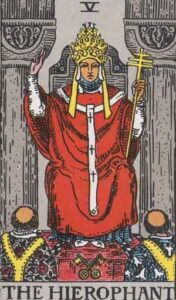
The Hierophant is the spiritual teacher, the keeper of sacred knowledge and the embodiment of tradition. Called The Pope in older decks, this card represents structured belief systems, religious and social institutions, and the pursuit of deeper understanding through established paths. It invites you to connect with something larger than yourself, whether that is a faith, a community, a mentor or the wisdom handed down by those who came before you.
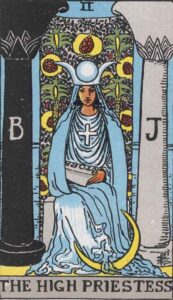
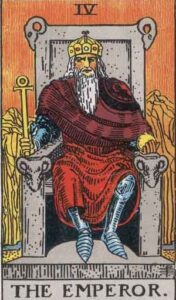
As the fifth card of the Major Arcana, the Hierophant follows The Emperor, who rules the material world, by bringing order to the spiritual and moral one. Where The High Priestess holds private, intuitive knowledge, the Hierophant shares knowledge openly through teaching, ritual and community. He asks a simple but searching question: what do you believe, and why?
- Symbolism
- Upright
- Reversed
- Love
- Career
- Spirituality
- Astrology and numerology
- Health
- Yes or no
- Feelings
- Advice
- As a person
- Combinations
- Positions
- FAQ
The Symbolism of The Hierophant
The triple crown and the triple cross
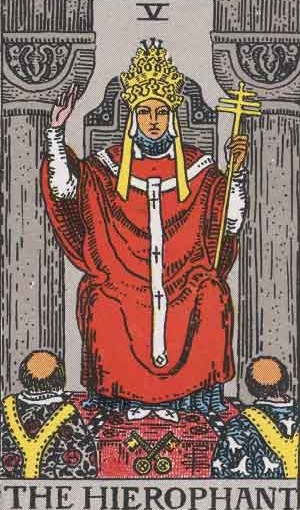
The Hierophant sits on a throne between two grey stone pillars, wearing a tall, three-tiered crown. The three tiers are often read as the physical, mental and spiritual levels of life, and his authority spans all three. In his left hand he holds a staff topped with a triple cross, another sign of his role as a bridge between everyday life and the sacred.
The blessing hand and the crossed keys
His right hand is raised in a gesture of blessing, with two fingers pointing upwards, a sign of teaching and spiritual grace passing from him to others. At his feet lie two crossed keys, one gold and one silver. They are often read as the keys to conscious and hidden knowledge, and they show that he is the guardian of teachings that are passed on to those who are ready.
The two followers
Two tonsured figures kneel before him, one robe patterned with roses and the other with lilies. They represent students and seekers who come to learn with humility. Their different robes suggest that there is more than one way to approach wisdom, perhaps through the heart and through the mind, and that a good teacher guides both.
The Hierophant Upright Meaning
Upright, the Hierophant suggests it is time to seek wisdom from trusted sources. This card can represent formal education, religious or spiritual guidance, a mentor, a supportive community or traditions passed down over time. You are being encouraged to follow tried-and-tested methods, or to learn the rules before you decide whether to break them.
Established wisdom has value because it has been tested by many people over a long time. There is no need to reinvent everything yourself. Innovation works best when it is built on a solid understanding of what came before, and the Hierophant asks for the humility to learn from people who have more experience than you.
The card also has a communal side. Belonging to a group that shares your values, whether that is a faith community, a professional body or a family tradition, can bring support and meaning. And sometimes the Hierophant suggests that you are ready to become a teacher or guide for others yourself.
Key upright themes
- Spiritual guidance and mentorship
- Following a tradition, doctrine or proven method
- Education, study and formal qualifications
- Belonging to a group, community or institution
- Shared values, ceremony and commitment
The Hierophant Reversed Meaning
Reversed, the Hierophant challenges tradition. You may need to question authority, break free from rigid thinking or forge your own path. Perhaps rules, outdated beliefs or other people’s expectations are feeling restrictive, and you are ready to find out what you believe for yourself.
This can be a healthy part of growth. The reversed Hierophant often shows interest in unconventional or personal spiritual paths, alternative ways of working, or a relationship that does not fit family expectations. It asks you to follow your own truth while still using discernment about which new teachers and ideas you trust.
It can also warn of dogma, either from others or in yourself. A teacher or institution may be demanding obedience without room for questions, or you may have become so attached to one belief that you judge anyone who differs. Sometimes it simply shows a lack of guidance: feeling lost without a mentor or a community to lean on.
Key reversed themes
- Rebellion against rules and structures
- Unorthodox beliefs or a personal spiritual path
- Challenging outdated systems and expectations
- Dogmatism, rigid thinking or judgement
- Feeling lost without a mentor or community
The Hierophant in Love
In love, the Hierophant represents traditional commitment: marriage, shared values and long-term partnership built on common beliefs. It suggests that what you both believe about family, faith, money and the future will matter a great deal to how well the relationship lasts.
If you are single
You may meet someone through a traditional setting such as family, friends, a place of worship, a class or a community group. The Hierophant favours a conventional courtship, where things develop step by step. It also asks you to be clear about your own values, so you can recognise someone who shares them.
If you are in a relationship
For couples, the Hierophant often signals a relationship becoming more serious: engagement, marriage, a formal commitment or meeting each other’s families. Family traditions, cultural expectations or religious considerations may play a role. Shared rituals, even small ones, can strengthen the bond.
Reversed in love
Reversed, the Hierophant can point to conflicting values, fear of commitment or pressure from family or society to conform. It may also describe a relationship that breaks social norms, which can be freeing but challenging. Be honest with each other about what you both want, rather than what you think you should want.
The Hierophant in Career and Money
Professionally, the Hierophant suggests working within established institutions such as schools, universities, public service, large companies or professional bodies. It favours traditional career paths, qualifications, training programmes and learning from an experienced mentor. Following proper procedures will serve you well.
It can also point to a calling to teach, counsel or guide others. Careers in education, religion, law, advice and training fit the Hierophant well, as does any role that involves passing on knowledge or upholding standards.
With money, the Hierophant favours conventional, well-established approaches: a regular pension, a recognised bank, sensible budgeting and advice from a qualified financial adviser. It is not a card for speculative risks or schemes that promise to beat the system.
Reversed, it may signal frustration with rigid structures, red tape or a boss who insists on doing things the old way. You may want to break out and innovate, or to work for yourself. Ask honestly: are you following a path that suits you, or one that is expected of you?
The Hierophant in Spirituality
Spiritually, the Hierophant encourages learning from books, teachers, traditions and time-honoured texts. It is a good time to explore structured practices such as ritual, prayer, study or a lineage-based tradition. Ceremonies, whether traditional or ones you create, can connect you to something bigger and to other people.
The deeper aim is to turn knowledge into lived wisdom. Test what you learn against your own experience, and look for teachers who welcome questions and care more about your growth than their own status. Over time, the outer teacher helps you develop your inner one.
Reversed, the Hierophant pushes you towards a more eclectic or personal spiritual path, encouraging you to trust your own inner guidance. That is fine, as long as you stay thoughtful about what you take on.
The Hierophant in Astrology and Numerology
Taurus and the element of Earth
The Hierophant is linked to Taurus, a fixed earth sign ruled by Venus. Taurus is patient, steady and loyal to what has proved its worth, and it brings spiritual ideas down to earth. Through Taurus, the Hierophant says that belief should show up in how you live: in daily habits, kept promises and consistent practice. The element of Earth adds stability and a respect for what lasts.
Taurus is also persistent. Spiritual growth under this card is more like a long walk than a sprint. Slow, faithful practice gives the most lasting results, even when progress feels invisible.
The number five
In numerology, five is the number of change, freedom and challenge. That may seem an odd fit for a card of tradition, but it hints at the Hierophant’s deeper lesson: real freedom often comes from first understanding the rules, and only then choosing which ones to keep. Five also sits between the stability of four, The Emperor, and the choices of six, The Lovers, so the Hierophant is where you learn the values you will later have to choose by.
The Hierophant in Health and Wellbeing
In health readings, the Hierophant points to expert guidance and proven approaches. If something is worrying you, this card supports seeing a qualified healthcare professional and following their advice. Complementary practices can have a place, but under the Hierophant they sit alongside conventional care rather than replacing it.
He also suggests that routine and ritual can support wellbeing. Regular rest, prayer, meditation or time in a supportive community can all help you feel steadier. Reversed, the card may show frustration with a one-size-fits-all approach. It is reasonable to ask questions and seek a second opinion, so long as you stay with qualified professionals.
Is The Hierophant a Yes or No Card?
Yes. The Hierophant is a yes, especially when you follow the conventional route, seek expert advice or act in line with your values.
It is a traditional yes. The answer is favourable if you do things properly, follow the established process or have the right people’s support. For questions about marriage, study or joining an organisation, it is particularly positive.
Reversed, the answer leans towards no, at least by the usual route. The conventional path may not suit you, or rules and other people’s expectations are standing in the way. You may need to find your own way through instead.
Have a question of your own? Try the free yes or no tarot reading: hold the question in mind and draw one card.
The Hierophant as Feelings
As feelings, the Hierophant describes someone who takes you seriously and wants to do things properly. They feel respect and a sense of commitment, and they may be thinking in terms of a long-term, conventional relationship. Meeting families, making it official or planning a future together could all be on their mind.
Their feelings are steady rather than dramatic. They may be quite traditional in how they show them and care a lot about shared values, loyalty and doing the right thing.
Reversed, their feelings may be tangled up with what others expect. They might care for you but feel pressure from family, culture or religion, or feel restricted by the idea of commitment. It can also show someone who wants a relationship on their own terms rather than a conventional one.
The Hierophant as Advice
As advice, the Hierophant says: learn from those who know. Find a mentor, take the course, read the classic texts or ask someone with experience. Follow the proven path for now, and build a solid foundation before you start improvising.
At the same time, keep asking yourself what you truly believe. Honour the traditions that genuinely support you, question the ones that do not, and let your values guide your choices. Respect the past, but do not be afraid to grow.
The Hierophant as a Person
As a person, The Hierophant is a keeper of knowledge and custom. It can describe a teacher, mentor, religious leader, tutor or senior colleague: someone who has learned a system thoroughly and passes it on. They value doing things properly, and they often become the person others go to for guidance on what is right or how things are done.
In your life, this person may be the one who helps you get a qualification, prepares you for a ceremony, or explains the unwritten rules of a family, workplace or community. They are loyal, principled and dependable. Their shadow side is a tendency to confuse the rules with the reason for them, which can make them dismissive of people who learn or live differently.
Reversed, The Hierophant as a person is either a rebel or a rigid enforcer. It can describe someone who rejects every tradition on principle, or someone who uses rules and status to control others and discourages questions. It may also be a mentor whose advice no longer fits the person you are becoming.
The Hierophant Tarot Combinations
The Hierophant is tradition and teaching, so the card beside it shows which convention is at stake and how you feel about it:
- The Lovers: a classic sign of commitment. Marriage, a formal union or a relationship built on shared beliefs (more on this pair).
- The Emperor: tradition backed by authority. Institutions, formal rules and official processes are in charge, so expect to follow the proper channels.
- Three of Pentacles: learning within a structure, such as an apprenticeship, a course or training with people who know the craft well.
- Four of Wands: a celebration with a formal side. A wedding, graduation or community event that marks a milestone.
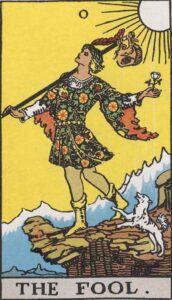
- The Fool: the established path meets the urge to wander off it. The pair asks whether you are following a tradition because it suits you or because it is expected.
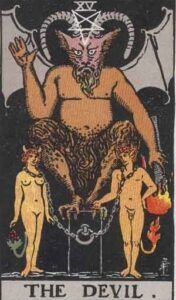
- The Devil: belief that has hardened into restriction. Rules, guilt or group pressure are holding someone in place, and the pair asks you to question them.
More pairs, and a quick way to read any two cards together, are in the tarot card combinations guide.
The Hierophant in Past, Present and Future Positions
In the past position
In the past, the Hierophant points to the values, faith or traditions you grew up with, or to a teacher who shaped you. Those early lessons still influence your choices. It is worth asking which of them you have truly chosen and which you simply inherited.
In the present position
In the present, the Hierophant suggests that a conventional route, a trusted mentor or a formal commitment is the way forward. It may point to study, a qualification, a ceremony such as a wedding, or joining a group that shares your values.
In the future position
In the future, the card can signal learning ahead, a commitment made formal or a new role as a guide for others. As your own knowledge grows, people may start coming to you for advice.
The Hierophant with other cards
With The Lovers, the Hierophant often points to marriage or a commitment built on shared values. With The Emperor, established institutions and rules dominate the situation. Next to The Fool, there may be a pull between the safe, expected path and a leap into something unconventional.
The Hierophant: Frequently Asked Questions
What does The Hierophant mean in a tarot reading?
The Hierophant represents tradition, spiritual teaching, institutions and shared values. It suggests seeking guidance from a mentor or established source, following proven methods and connecting with a community. It also asks you to examine your beliefs, so that the traditions you keep are ones you have genuinely chosen.
Is The Hierophant a yes or no card?
The Hierophant is generally a yes, particularly when you take the conventional route, follow proper process or seek expert advice. It is especially positive for marriage, study and joining organisations. Reversed, it leans towards no, suggesting rules or expectations block the usual path and you may need your own approach.
What does The Hierophant mean in love?
In love, The Hierophant points to traditional commitment, such as engagement or marriage, and a relationship built on shared values. Singles may meet someone through family, friends or community. Reversed, it can show conflicting beliefs, fear of commitment or pressure from family or society about who you should be with.
What does The Hierophant mean as a person?
As a person, The Hierophant is a teacher, mentor, religious leader or respected expert: someone who passes on knowledge and upholds standards. They are principled, patient and often traditional. Reversed, the same figure may be dogmatic and controlling, or you may be rejecting their guidance in favour of your own way.
What does The Hierophant reversed mean?
Reversed, The Hierophant signals questioning tradition and authority, exploring unconventional beliefs or breaking away from expectations. It can be a healthy move towards independence, but it may also warn of dogmatism, rigid rules or feeling lost without guidance. The card asks you to find your own truth with discernment.
Final Thoughts
The Hierophant asks what you believe, and why. Whether you choose to honour tradition or break from it, this card reminds you that wisdom can come from both the old ways and your own experience. The best traditions are living ones that grow as the people in them do.
If the Hierophant has appeared for you, look for the teacher, community or commitment that will help you grow. To explore the next card on the journey, read about The Lovers, or browse the full Major Arcana.