A tarot card combination is two or more cards read together, so that each one changes the meaning of the other. To read a pair, take each card’s own meaning, find the thread they share, and let the stronger card set the theme while the other shows how it plays out. The same card can say quite different things depending on its neighbour: The Tower next to The Star is upheaval followed by healing, while next to the Ten of Swords it is an ending that hits rock bottom.
Below is a method for reading any pair, how suits, numbers, court cards and reversals combine, and 82 common combinations grouped by theme. Each meaning is built from the cards’ own pages, so if a pair doesn’t quite fit your question, click through to each card. For single cards, see all 78 tarot card meanings, or every card’s love meaning and career meaning. If you’re new to tarot, start with how to read tarot cards.
Jump to a section:
- How to read two cards together
- How the suits combine
- When the same number appears twice
- Love and relationship combinations
- Career and money combinations
- Endings, change and recovery
- Warning and caution combinations
- Timing: fast and slow combinations
- Spiritual and inner-life combinations
- Major + Major power pairs
- Positive and lucky combinations
- A three-card example
- FAQ
How to Read Two Cards Together
Most pairs can be read in a few minutes with this checklist. Work through it in order, and stop as soon as the message is clear.
- Read each card alone first. Know what each one says before you blend them.
- Find the common thread. Ask what the two cards share. The overlap is usually the heart of the message.
- Let the stronger card set the tone. A Major Arcana card outweighs a Minor one. The Major names the big theme, and the Minor shows how it plays out day to day.
- Check the suits. Two cards of the same suit intensify that area of life. Different suits bring two areas together, such as feelings and money (see how the suits combine).
- Check the numbers. A shared number repeats its theme: two Fives double the sense of conflict or loss (see repeated numbers).
- Mind the order. In a line, the first card often reads as the cause or the starting point, and the second as the result or the next step.
- Adjust for reversals. A reversed card softens, blocks or delays its partner’s energy rather than cancelling it.
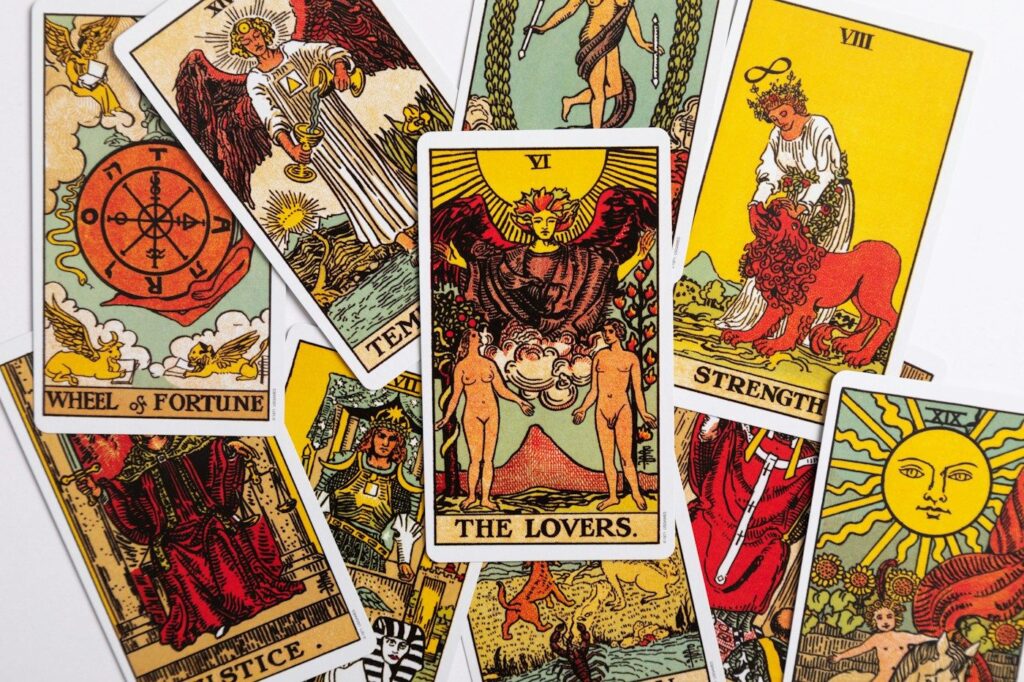
The Verb and Adverb Approach
When two cards seem unrelated, give them jobs. Make the stronger card the verb: what is happening. Make the other card the adverb: how it happens, or in what spirit. It stops two meanings from sitting side by side without touching.
Take Death as the verb: something ends. Now change the adverb:
- Death and the Four of Swords: it ends quietly, with time to rest and recover.
- Death and the Eight of Wands: it ends fast, and the next thing arrives quickly.
- Death and the Seven of Pentacles: it ends slowly, after a long spell of weighing up whether the effort is still worth it.
- Death and the Two of Cups: a relationship changes form. The old way of being together ends so that a more honest one can begin.
It works the other way round too. With the Eight of Wands as the verb (things move fast) and the Page of Cups as the adverb, what arrives quickly is something sweet: a heartfelt message, an invitation or a new feeling.
Major + Minor
A Major Arcana card names a big life theme, and a Minor shows where it lands. The Tower with the Five of Pentacles is upheaval that shows up as money trouble; The Tower with the Three of Swords is upheaval that shows up as heartbreak. A spread full of Minors is more about everyday choices you can change.
Two Majors together have their own section below. For each group, see the Major Arcana and Minor Arcana guides.
Court Cards in a Combination
A court card usually shows who is involved, or an attitude you’re being asked to take, and its partner shows what they bring or what happens. The Knight of Cups with the Ace of Cups is a romantic person bringing new love. The King of Pentacles with the Three of Pentacles is an experienced boss or mentor noticing your work.
Two court cards together often describe two people, or two sides of you: a Knight beside a King can be a younger, faster energy meeting an established one. Repeated ranks carry their rank’s theme. Several Pages point to news or learning, several Knights to things happening fast, several Queens to care and emotional maturity, and several Kings to authority. Tarot court cards explained covers all sixteen.
Reversed + Upright
A reversed card doesn’t cancel its partner. It softens, delays or blocks it. The Ace of Pentacles with the Three of Wands upright is an opening with room to expand now; with the Three of Wands reversed, it’s a real opportunity that is slow to grow.
A few cards read more hopefully reversed, and they can flip a pair. The Devil reversed is breaking free, the Eight of Swords reversed is release and the Five of Pentacles reversed is recovery. If both cards are reversed, the whole message is muted or delayed, so ask what’s in the way.
Two Cards in a Yes or No Question
In a yes or no reading, two yes cards make a clear yes, and two no cards a clear no. With one of each, let the Major decide if there is one. If not, the answer is usually “yes, but” or “not yet”, and the no card tells you what’s in the way. The Four of Wands with the Seven of Swords, for example, could be a yes to the celebration with a warning that not everyone involved is being honest.
How the Suits Combine
Many readers use a system from the Golden Dawn tradition called elemental dignities. Each suit has an element, and some elements support each other while others clash: Wands are fire, Cups are water, Swords are air and Pentacles are earth.
| Elements | Relationship | Effect on the pair |
|---|---|---|
| Fire + Air (Wands + Swords) | Friendly | Strengthen each other: ideas turn into action |
| Water + Earth (Cups + Pentacles) | Friendly | Strengthen each other: feelings find practical form |
| Fire + Water (Wands + Cups) | Contrary | Weaken each other: passion and emotion pull in different directions |
| Air + Earth (Swords + Pentacles) | Contrary | Weaken each other: plans and practical reality clash |
| Fire + Earth, Air + Water | Neutral | Neither helps nor hinders; read the cards on their own terms |
| Same element | Strong | Intensifies that element, for better or worse |
You don’t need to use elemental dignities, but they’re a useful tiebreaker when a pair could be read either way.
Suit + Suit at a Glance
Each suit also covers an area of life. Wands are passion, drive and ambition; Cups are emotions, love and intuition; Swords are thoughts, truth and conflict; Pentacles are money, work and the body. When two suits meet, those areas meet too:
| Suits | What the mix tends to mean |
|---|---|
| Wands + Wands | Energy doubled: drive and speed, which can burn out or flare into conflict. |
| Cups + Cups | The question is emotional, whatever it seems to be about. Watch for overwhelm or wishful thinking. |
| Swords + Swords | All in the head: decisions, conversations and conflict. Often a sign of stress or overthinking. |
| Pentacles + Pentacles | Practical matters: money, work, home and health. Slow and solid, or stuck if nothing moves. |
| Wands + Cups | Passion meets feeling: romance with a spark, or creative work you love. Excitement and emotion may pull different ways. |
| Wands + Swords | Ideas turn into action, and decisions come quickly. Keep it from turning combative. |
| Wands + Pentacles | Ambition meets practical means: a plan that could earn. The energy needs patience to become real. |
| Cups + Swords | Heart and head: an honest talk about feelings, or a clash between what you feel and what you think. |
| Cups + Pentacles | Feelings find practical form: commitment, a home, security. |
| Swords + Pentacles | Plans meet reality: contracts, paperwork, worry about money. Expect friction between the idea and the budget. |
Order adds a shade. Wands then Cups reads as action that stirs up feelings; Cups then Wands as a feeling that sparks action.
When the Same Number Appears Twice
Each number carries the same theme in all four suits, so a shared number repeats that theme. Two cards of the same number underline it, and three or four make it the main message of the reading. The Minor Arcana guide lists every number and its four cards.
| Number | When it repeats |
|---|---|
| Aces | New beginnings in more than one area of life. Three or four Aces: a big fresh start, with plenty of opportunity. |
| Twos | Choices, balance and partnership. A decision between two paths, or a relationship at the centre of things. |
| Threes | Growth and collaboration: plans developing, groups, friends and teamwork. |
| Fours | Stability and rest: consolidating and standing still, or feeling stuck if it goes on too long. |
| Fives | Conflict, loss or struggle. A difficult patch, but a stage in the story rather than the end of it. |
| Sixes | Harmony and recovery: things improving, help arriving, give and take restored. |
| Sevens | Reflection and testing: pause, assess and choose carefully before you act. |
| Eights | Movement: change, progress and things picking up speed, or a push to get unstuck. |
| Nines | Near-completion: the last stretch, with feelings running high. |
| Tens | Completion: a cycle ending, for better or worse, with a new one about to begin. |
For example, the Five of Cups and the Five of Pentacles together double the sense of loss, in feelings and in money. The Six of Swords with the Six of Pentacles is recovery on two fronts: a move to calmer waters, with help along the way.
If one card keeps turning up across readings, see what it means when you keep pulling the same card.
Love and Relationship Combinations
For every card’s love meaning on one page, see love tarot card meanings, or try the relationship spread and the free love tarot reading.
The Lovers and Two of Cups
The Lovers adds shared values and a real decision to commit; the Two of Cups adds attraction and emotional honesty. Together they describe a bond that is mutual, chosen and equal.
Reversed: The feeling is there but the balance isn’t. One person may want more, or something important hasn’t been said.
Two of Cups and Ten of Cups
The Two of Cups is the relationship and the Ten of Cups is the happy home it can grow into. Together they point to long-term commitment: living together or building a family life.
Reversed: With the Ten reversed, the love is real but you may disagree about the future, such as where to live or whether to have children.
Knight of Cups and Ace of Cups
The Knight of Cups brings an offer or a declaration, and the Ace of Cups is new love beginning. Together they are one of the clearest signs of romance arriving: someone saying how they feel, an invitation, a warm new start.
Reversed: With the Knight reversed, watch for consistency. The romance may blow hot and cold.
Six of Cups and Two of Cups
The Six of Cups brings back the past, and the Two of Cups makes the feeling mutual. Together they often describe reconnecting with an old flame, a childhood friend or an ex, with the interest returned.
Reversed: With the Six reversed, ask whether you want the person or a rose-tinted memory of them.
The Devil and The Lovers
The Lovers is a free choice made on shared values; The Devil is attachment, temptation or control. Together they describe intense attraction tangled with something unhealthy, or a choice between desire and what you value.
Reversed: With The Devil reversed, an old pattern is breaking and you can choose, or leave, with clear eyes.
Three of Swords and The Lovers
The Three of Swords is heartbreak, and next to The Lovers it lands inside a relationship: betrayal, a hard choice between two people or a third party. One card is never proof of infidelity, so weigh it against what you actually know.
Three of Swords and Ten of Cups
The Ten of Cups is the happy home and the Three of Swords is the painful truth that cuts into it. Together they describe hurt within a family or a long relationship, or a gap between the ideal picture and what’s really going on.
Order: Three of Swords first reads as heartbreak that heals into a happier home. Ten of Cups first warns that something painful needs talking about before it spoils what you have.
Ten of Pentacles and Four of Wands
The Four of Wands is the celebration and the Ten of Pentacles is the lasting family security behind it. Together they often point to a wedding, moving in together, buying a home or a family gathering that marks a new chapter.
Four of Wands and Two of Cups
The Two of Cups is the bond and the Four of Wands is the celebration around it. Together they are a traditional sign of commitment going public: an engagement, a wedding, an anniversary or meeting the family.
Page of Cups and Two of Cups
The Page of Cups is a heartfelt message or a shy first move, and the Two of Cups is mutual feeling. Together they suggest a confession that is welcomed, or a crush that turns out to be returned.
Knight of Cups and The Lovers
The Knight of Cups makes the offer and The Lovers is the choice it asks of you. Together they can point to a proposal or an invitation to take things further, with a decision that should rest on shared values as much as feeling.
Queen of Cups and King of Cups
The Queen of Cups brings empathy and intuition, the King of Cups calm and steadiness. Together they can describe a couple who look after each other without drama, or a supportive older figure in your life.
Eight of Cups and Six of Cups
The Eight of Cups walks away from what no longer fulfils you, while the Six of Cups keeps looking back. Together they describe leaving while still feeling nostalgic.
Reversed: With the Eight reversed, an ex may come back. Look at what has actually changed before you open the door.
Two of Swords and Two of Cups
The Two of Cups shows the feelings are mutual; the Two of Swords shows someone refusing to look at them. Together they describe a connection stuck in limbo, with attraction on both sides and avoidance keeping it still.
Reversed: With the Two of Swords reversed, the stalemate breaks and you both find out where you stand.
Career and Money Combinations
See career and money meanings for every card, or think a decision through with the career path spread. For big financial decisions, talk to a qualified professional as well.
Ace of Pentacles and Three of Wands
The Ace of Pentacles is a new practical opportunity and the Three of Wands is expansion. Together they point to an opening with room to grow: a new client, a job with prospects or a venture reaching new markets, possibly abroad.
Timing: The Three of Wands is a slow card, so the growth builds over months, not overnight.
Ten of Pentacles and King of Pentacles
The King of Pentacles is disciplined success and the Ten of Pentacles is wealth that lasts. Together they describe established security: a stable career, a family business or long-term planning paying off.
Five of Pentacles and Six of Pentacles
The Five of Pentacles is hardship and the Six of Pentacles is help. Together they describe difficulty eased by support, and ask you to ask for help or accept it when it’s offered.
Reversed: With the Six reversed, read the terms: help may come with strings attached.
Eight of Pentacles and The Magician
The Eight of Pentacles is patient skill-building and The Magician is the moment skill becomes influence. Together they say your learning is paying off, so pitch the idea, show your work or ask for more responsibility.
Ace of Wands and The Chariot
The Ace of Wands is the spark of a new project and The Chariot is the willpower to drive it home. Together they describe a new venture pushed hard and fast towards success.
Four of Cups and Ace of Pentacles
The Four of Cups is apathy and the Ace of Pentacles is a real opportunity. Together they warn that a good chance could pass you by because you’re not in the mood to notice it. Look again at what you’ve dismissed.
Five of Pentacles and Ace of Pentacles
The Five of Pentacles is hardship and the Ace of Pentacles is a new start in exactly that area. In that order, it’s one of the most hopeful money pairs: a new job or income after a hard stretch.
Order: With the Ace first, it’s a caution to budget well so a good start isn’t undone by money trouble.
Three of Pentacles and Eight of Pentacles
Both are cards of craft: the Three of Pentacles is skill recognised by a team, the Eight of Pentacles patient practice alone. Together they point to training, an apprenticeship or a role where your expertise is growing and being noticed.
Six of Wands and The Sun
The Six of Wands is public recognition and The Sun is success. Together they are about as good as career news gets: a promotion, a win or a launch that goes well.
Ten of Wands and Nine of Wands
The Nine of Wands is the last push and the Ten of Wands is the load that comes with it. Together they describe someone near the finish line carrying far too much. You can finish, but not by taking on more.
Page of Pentacles and Ace of Pentacles
The Page of Pentacles is a first practical step and the Ace of Pentacles is the opportunity itself. Together they often point to a new job, internship, apprenticeship or course: a small beginning with real potential.
King of Wands and Ace of Wands
The King of Wands is the visionary leader and the Ace of Wands is a new idea. Together they describe starting something of your own: a business, a freelance practice or a project you lead from the front.
Four of Pentacles and Five of Pentacles
The Four of Pentacles holds on tight and the Five of Pentacles fears being left out in the cold. Together they describe money decisions driven by fear of loss. Saving is sensible; gripping too hard keeps you stuck.
Endings, Change and Recovery
Most of these describe something clearing away rather than something being taken, and several have recovery built in.
Death and The Tower
Death ends things; The Tower ends them suddenly. Together they describe unavoidable change: something finishes abruptly to make room for what comes next. Both clear away what could not last.
Reversed: The change is being resisted or delayed, not avoided. It may be kinder to make it yourself.
The Tower and Ten of Swords
The Tower is the sudden fall and the Ten of Swords is rock bottom. Together they describe a painful ending that is also complete: the worst is over, and from here things improve.
In love: Usually a definite ending rather than a rough patch.
Death and Eight of Cups
Death closes a chapter and the Eight of Cups walks away from it. Together they describe leaving something that has already ended emotionally: a relationship, a job or a way of life.
Six of Swords and The Star
The Six of Swords is the move to calmer waters and The Star is healing. Together they describe recovery after a hard time. Both lean slow, so expect steady improvement rather than an overnight fix.
The Tower and The Star
The Tower is card XVI and The Star is XVII: in the Major Arcana, the calm follows the storm. Together they describe upheaval followed by healing, and a clearer, more hopeful place afterwards.
Death and The Fool
Death closes a chapter and The Fool steps into the next. Together they describe a clean ending followed by a genuine fresh start: a new job, city or relationship.
Death and Five of Cups
Death is the ending and the Five of Cups is the grief that follows. On the Five of Cups, two cups still stand behind the figure, so the pair also asks you to notice what remains when you’re ready to turn around.
Wheel of Fortune and The Tower
The Wheel of Fortune turns and The Tower shakes. Together they describe a sudden change of circumstances that feels out of your hands. Cycles keep moving, and this one will turn again.
Eight of Cups and Six of Swords
The Eight of Cups is the decision to leave and the Six of Swords is the crossing. Together they describe moving on quite literally: relocating, changing jobs or leaving a relationship for somewhere calmer.
Judgement and Death
Judgement is an awakening and a second chance; Death is the ending that makes room for it. Together they describe a major change you feel called to make, with an honest look back at what you’re leaving.
Warning and Caution Combinations
These pairs don’t predict disaster. They point to something that needs attention while it’s still easy to deal with.
The Moon and Seven of Swords
The Moon is illusion and the Seven of Swords is secrecy. Together they say something is hidden or not as it seems. Trust your instincts, but check the facts and get important details in writing.
Reversed: The truth is starting to come out.
The Devil and Eight of Swords
Both cards show someone bound, and in both the restriction is looser than it looks. The Devil is attachment; the Eight of Swords is feeling trapped by fear. Together they describe a situation that feels impossible to leave, and seeing the trap clearly is the first step out.
Reversed: Both cards become release cards when reversed, so you’re already getting free.
Nine of Swords and The Moon
The Nine of Swords is worry at night and The Moon is uncertainty. Together they describe anxiety fed by not knowing, with fears bigger in the dark than they are. Get the facts and wait for daylight before deciding anything.
Worth knowing: If worry is affecting your sleep or health, talk to your doctor.
Five of Swords and Seven of Swords
The Five of Swords is winning at all costs and the Seven of Swords is getting away with something. Together they warn of underhand tactics: office politics, someone taking credit, a win not worth its cost.
Seven of Cups and The Moon
The Seven of Cups is wishful thinking and The Moon is illusion. Together they say you may be seeing what you want to see. Test each option against the facts before you commit.
Five of Wands and Five of Swords
Two Fives, so conflict doubled. The Five of Wands is noisy rivalry and the Five of Swords is a fight someone wins badly. Together they warn that bickering could turn into real point-scoring.
Ten of Wands and Four of Swords
The Ten of Wands is carrying too much and the Four of Swords is rest. Together they say the pace can’t last: step back before your body or mind decides for you.
Four of Pentacles and The Devil
The Four of Pentacles grips money and control, and The Devil is attachment. Together they warn that security has become a cage: overworking, hoarding or staying somewhere only for the money.
Reversed: The pair can mean letting go instead: clearing a debt, breaking a spending habit or loosening your grip.
Page of Swords and Seven of Swords
The Page of Swords gathers information and the Seven of Swords keeps secrets. Together they say someone may be watching or asking questions, and what you share may travel. Be discreet.
Eight of Swords and Nine of Swords
The Eight of Swords is feeling trapped and the Nine of Swords is sleepless worry. Together they describe overthinking that has become its own prison. The way out starts with one conversation or one small step, not with thinking harder.
Worth knowing: If anxiety has become persistent, a doctor or counsellor can help.
Timing: Fast and Slow Combinations
Tarot timing is never exact, but some cards are fast and others slow (see fast and slow cards). When two of them meet, the pace often becomes the message.
Eight of Wands and Knight of Swords
Two of the fastest cards in the deck: the Eight of Wands is momentum and the Knight of Swords decisive action. Together they say things are about to move very quickly. Speed helps until it causes a mistake.
Eight of Wands and Wheel of Fortune
The Wheel of Fortune is a turning point and the Eight of Wands makes it fast. Together they describe sudden good timing: a stuck situation breaking free or an opportunity appearing out of nowhere.
Eight of Wands and Two of Cups
The Two of Cups is mutual attraction and the Eight of Wands speeds it up. Together they describe a connection that gets serious within weeks.
Reversed: With the Eight reversed, talk about pace: one of you may be rushing while the other hangs back.
The Hanged Man and Four of Swords
The Hanged Man is a pause and the Four of Swords is rest. Together they describe an enforced pause: rest and reflect before you act. As a timing answer, it’s not yet.
Seven of Pentacles and Knight of Pentacles
The Seven of Pentacles is patience and the Knight of Pentacles is steady progress. Together they are the tarot’s slow-but-sure pair: results are coming, but not quickly.
Two of Swords and The Hanged Man
The Two of Swords is a stalemate and The Hanged Man is a pause. Together they say nothing will move for a while, and the delay may be partly chosen. Look at the decision you’re avoiding.
Six of Swords and Eight of Wands
Both cards carry travel. The Six of Swords is a gradual move and the Eight of Wands adds speed, so together they can point to a trip or relocation that happens sooner than expected.
Three of Wands and Eight of Wands
The Three of Wands waits for plans to come in; the Eight of Wands is the moment they do. Together they describe waiting turning into movement: replies, news from far away, sudden momentum.
Spiritual and Inner-Life Combinations
Pairs about intuition, reflection and healing, which often turn up when the real question is about you rather than the situation.
The Moon and The High Priestess
Two cards of intuition. The High Priestess is quiet inner knowing and The Moon is dreams and illusion. Together they say your intuition is strong but some information is still hidden. Notice dreams and gut feelings, and wait before acting.
In love: Something is unspoken. Go slowly and watch actions as well as words.
The Hermit and The High Priestess
The Hermit steps away and The High Priestess listens. Together they describe a time to withdraw from outside noise and trust what you know. Good for study or journalling; poor for rushed decisions.
The Star and Temperance
The Star is hope and Temperance is balance. Together they describe healing that happens gently, through rest, moderation and patience. Neither card is fast.
Judgement and The Hermit
The Hermit is reflection and Judgement is the calling that comes out of it. Together they describe a big decision becoming clear after time alone.
Ace of Cups and The High Priestess
The Ace of Cups is an emotional and spiritual opening, and The High Priestess is intuition. Together they describe a time when your intuition is especially open: strong feelings, meaningful dreams or a new spiritual practice.
The Devil and The Star
The Devil is an unhealthy attachment and The Star is healing. In that order they describe recovery from something that had a hold on you, such as a habit, a relationship or a pattern.
Worth knowing: If the attachment is an addiction, take the pair as encouragement to get proper support, not as a substitute for it.
Page of Cups and The Moon
The Page of Cups is imagination and The Moon is the subconscious. Together they suggest vivid dreams, creative inspiration or a hunch worth writing down. A feeling isn’t a fact, though, so check the hunch before acting on it.
Queen of Cups and The High Priestess
The Queen of Cups is empathy and The High Priestess is intuition. Together they describe someone who picks up on what others feel before anyone says a word. The pair asks you to protect that gift with good boundaries.
Major + Major Power Pairs
Two Majors together mean the question touches something important. Cards next to each other in the sequence, such as XVI and XVII, often read as one step leading to the next. See the Major Arcana for all 22.
Wheel of Fortune and The Star
The Wheel of Fortune is a turning point and The Star is hope. Together they say luck is turning your way after a hard time. On whether things will improve, the pair leans yes, though The Star is steady rather than sudden.
The Empress and The Emperor
The Empress is nurture and The Emperor is structure. Together they are care plus stability: a partnership where each brings something different, parenthood, or a creative project with a solid plan.
The Magician and The High Priestess
Cards I and II: The Magician acts and The High Priestess knows. Together they say you have both the skills and the inner guidance you need, so act on your intuition, not instead of it.
The Fool and The World
The Fool is card 0 and The World is XXI, the start and end of the Major Arcana. Together they describe one cycle completing as another begins. The World is also a travel card, so the pair can mean a big trip.
The Lovers and The Hierophant
The Lovers is a values-led choice and The Hierophant is tradition. Together they are a classic sign of commitment: marriage, a formal union or a relationship built on shared beliefs.
The Tower and The Devil
The Devil is XV and The Tower is XVI. The Devil’s chains are self-imposed, and when they aren’t released willingly, The Tower breaks them by force. Together they describe breaking free, sometimes dramatically.
Justice and Judgement
Justice is cause and effect and Judgement is reckoning. Together they describe accountability: a decision, a review or a legal matter reaching its conclusion, leaning towards a fair outcome if you’ve been honest.
Worth knowing: For anything legal, take proper advice rather than relying on the cards.
The Chariot and Strength
The Chariot is willpower and Strength is quiet courage. Together they describe winning through self-control: a firm direction, handled gently.
The Moon and The Sun
The Moon is XVIII and The Sun is XIX: confusion, then clarity. Together they say the fog is lifting, and what felt uncertain or frightening will look simpler in daylight.
The Emperor and The Tower
The Emperor is structure and The Tower is sudden collapse. Together they describe a rigid structure being shaken: a restructure, a change of leadership or a plan too inflexible to survive a shock.
Temperance and The Devil
Temperance is XIV and The Devil is XV: moderation next to excess. Together they ask which way you’re leaning, often around habits, spending or a relationship that has lost its balance.
Positive and Lucky Combinations
The pairs most people hope to see, though a reversal can still slow them down.
The Sun and The Star
The Sun is joy and success, The Star hope and healing. Together they are one of the most positive pairs in the deck, and in a yes or no question both are clear yeses.
Wheel of Fortune and The World
The Wheel of Fortune is a lucky turning point and The World is completion. Together they describe a cycle completing at the right time: a goal reached or a chapter ending well.
Nine of Cups and Ten of Cups
The Nine of Cups is the wish card and the Ten of Cups is happiness shared. Together they describe wishes fulfilled, with personal contentment that extends to the people you love.
The Fool and Ace of Wands
The Fool is a leap of faith and the Ace of Wands is a spark of inspiration. Together they describe a bold new start, full of energy.
The Empress and Ace of Cups
The Empress is abundance and the Ace of Cups is new love. Together they describe love and creativity overflowing, a time to nurture and receive. Some readers see a hint of fertility here, though no card is a pregnancy test.
The Sun and Ten of Cups
The Sun is joy and the Ten of Cups is family happiness. Together they describe a warm home life, good times with the people you love and relationships that feel easy.
Ace of Wands and Ace of Cups
Two Aces, two beginnings. The Ace of Wands brings the spark and the Ace of Cups the feeling. Together they describe a new romance with real chemistry, or creative work you care about.
Worth knowing: Fire and water are contrary elements, so the passion may run ahead of the feelings for a while.
Three of Cups and Four of Wands
The Three of Cups is friendship and the Four of Wands is a milestone. Together they describe a celebration that means something: a wedding, a reunion, a housewarming or a team marking a finished project.
A Three-Card Example
Here’s the method across a whole spread. Imagine someone asks, “What do I need to know about my love life right now?” and draws a past, present and future line: The Tower, the Six of Swords reversed and the Two of Cups.
- Each card alone. The Tower is a sudden upheaval. The Six of Swords reversed is being stuck in transition, still carrying emotional baggage. The Two of Cups is a mutual connection between equals.
- The strongest card. The Tower is the only Major, so the reading is shaped by a big, sudden change in the past.
- The pairs. The Tower then the Six of Swords reversed: after the shock, the move to calmer waters has stalled. The Six of Swords reversed then the Two of Cups: an old weight being carried towards a new connection.
- Suits and order. Swords then Cups, air and water, is a neutral mix: the head is still processing what the heart wants next. Read in order, the middle card is the step that opens the way to the last.
Put together, a reading might say: “A sudden ending shook you, and part of you hasn’t finished leaving it behind. A mutual connection is possible, and it will be easier to meet someone as an equal once you’ve put down what you’re still carrying.” That’s more useful than three separate meanings, and it gives the person something to do.
Try it yourself with the free three-card reading: every card you draw links to its full meaning, so you can compare them side by side.
Frequently Asked Questions
What is a tarot card combination?
Two or more cards read together, so that each changes the meaning of the other and the separate meanings become one message.
Which card matters more in a combination?
A Major Arcana card usually sets the theme, and a Minor shows how it plays out. Between two cards of the same kind, the first in the line, or the one in the more important position, tends to lead.
Do reversed cards change a combination?
Yes. A reversed card usually softens, delays or blocks the energy of its pair rather than reversing the whole message. A few cards, such as The Devil and the Eight of Swords, read more hopefully reversed and can turn a difficult pair into one about release.
What are the most positive tarot card combinations?
The Sun with The Star, the Nine of Cups with the Ten of Cups, and Wheel of Fortune with The World are among the most positive pairs. For love, The Lovers with the Two of Cups is hard to beat; for money, the Ten of Pentacles with the King of Pentacles.
Which tarot combinations point to a breakup?
The Tower with the Ten of Swords, Death with the Eight of Cups, and the Three of Swords with The Lovers are the pairs most often read as an ending. Even so, no single combination decides a relationship. Read the whole spread, and weigh it against what you actually know.
What does it mean when the same number appears twice?
A shared number repeats its theme across two areas of life. Two Fives double the sense of conflict or loss, two Aces bring two new beginnings, and two Tens say more than one cycle is ending at once.
Practise Reading Combinations
Combinations become second nature with practice. Draw two cards each morning and write one sentence that joins them. For a quick answer to a single question, the yes or no tarot tool shows how each card leans, and the free three-card reading lets you practise pairs in a real spread.